
There are moments in history that force humanity to stop and ask one of the most difficult questions of all: what does it truly mean to be a good person when the world around you becomes completely consumed by evil? Throughout history, millions of people have faced moments of fear, uncertainty, and impossible choices. Some chose survival. Some chose silence. Some chose to look away because the suffering of others was too painful to confront. But every once in a while, there appears someone whose actions remind us that the human spirit is capable of something far greater than fear. Janusz Korczak was one of those extraordinary people.
His story is not simply the story of a doctor who cared for children. It is not only the story of an educator who changed the way society viewed childhood. It is the story of a man who spent his entire life proving one powerful belief: every child is valuable, every child deserves dignity, and every child deserves someone who will never abandon them.
During the darkest years of the twentieth century, when hatred and violence attempted to erase the humanity of millions of people, Janusz Korczak stood as a quiet but unbreakable symbol of compassion. He did not have an army behind him. He did not have political power. He did not command soldiers or control governments. His weapon was something far more difficult to destroy — his unwavering love for children.
When the Nazi regime created a world where human beings were reduced to numbers, Korczak spent his final years reminding children that they were not numbers. They were not victims. They were not forgotten.
They were human beings.
And to him, that was something worth protecting until his very last breath.
Janusz Korczak was born Henryk Goldszmit in Warsaw in 1878, during a time when Poland was divided and controlled by foreign powers. He was born into a Jewish family that valued education and intellectual development. His father, Józef Goldszmit, was a respected lawyer, and his family belonged to the educated middle class. But behind the appearance of stability, young Henryk experienced deep personal pain.
His father suffered from serious mental illness, and eventually the family’s life changed dramatically. The boy who would later become one of the world’s greatest defenders of children experienced firsthand the fear and confusion that can enter a child’s world when a family begins to fall apart.
That experience never left him.
While many people remember childhood as a carefree period, Korczak understood that childhood could also contain loneliness, uncertainty, and suffering. He understood that children often carry pain silently because they do not always have the words or power to explain what they are feeling.
Perhaps that was why he became so determined to listen to them.
He believed adults often made a terrible mistake: they assumed children were incomplete human beings waiting to become adults. Korczak believed the opposite. A child was not a future person.
A child was a person already.
A child had thoughts.
A child had emotions.
A child had dreams.
A child deserved respect.
This belief would become the foundation of everything he did.
THE DOCTOR WHO DECIDED TO HEAL MORE THAN BODIES
When Henryk Goldszmit became a medical student and later a doctor, many people expected him to follow a traditional path. He had the intelligence, discipline, and talent necessary to build a successful career. He could have become a respected physician, earned a comfortable income, and lived a secure life.
But Korczak was never motivated by comfort.
The more he worked with children, the more he realized that many childhood problems could not be solved simply with medicine.A doctor could treat an infection.A doctor could heal an injury.A doctor could save a child from physical illness.But who would heal the emotional wounds of children who felt unwanted?
Who would comfort children who had lost their parents?
Who would protect children who had nobody speaking for them?
Korczak believed that society had a responsibility toward its most vulnerable members, especially children.
He began writing under the name Janusz Korczak and became known not only as a physician but also as a writer and educator. His books for children were revolutionary because he did not write down to them. He wrote with the understanding that children were intelligent, curious, and capable of understanding complex ideas.He respected their minds.
He respected their feelings.He respected their humanity.Unlike many adults of his era, Korczak did not believe children needed to be controlled constantly. He believed they needed guidance, trust, and opportunities to learn responsibility.
His philosophy was simple but powerful:Children become better people when adults treat them as people.
This idea eventually led him to create the most important work of his life.In 1912, he founded the Jewish Orphans’ Home in Warsaw.At first glance, it was an orphanage.But in reality, it was something much more extraordinary.It was a home built around respect.
THE ORPHANAGE THAT BECAME A CHILDREN’S REPUBLIC
The world inside Janusz Korczak’s orphanage was unlike almost any other institution of its time.
Most orphanages in the early twentieth century were based on strict discipline. Adults made every decision. Children followed rules. Their role was to obey.Korczak believed that approach failed to recognize children as individuals.
He wanted the children in his care to understand something they had often been denied:They mattered.Inside the orphanage, children were encouraged to participate in daily life. They helped maintain the community. They learned cooperation. They discussed problems openly. They were given responsibilities because Korczak believed responsibility created confidence.
One of his most remarkable ideas was the creation of a children’s court.
It was an idea far ahead of its time.The children themselves could discuss conflicts and seek solutions. The purpose was not punishment but fairness.
If one child hurt another, the question was not simply:
“Who is guilty?”The question was:
“What happened, and how can we make things right?”Korczak understood that children make mistakes because they are learning. He believed shame and humiliation damage children, while understanding and forgiveness help them grow.
The children’s court became a symbol of his philosophy.
He was not preparing children only to survive.He was preparing them to become thoughtful, compassionate human beings.
The orphanage even had its own newspaper, meetings, and systems where children could express their opinions. It became almost like a small democratic society created specifically to teach children respect and responsibility.
To many outsiders, these ideas seemed unrealistic.But Korczak saw something others did not.
He saw potential.
Where others saw abandoned children, he saw future citizens.Where others saw weakness, he saw strength waiting to develop.Where others saw children who needed control, he saw children who needed trust.The children in his orphanage were not simply residents.They were his family.And he was not simply their director.He was their protector.Their teacher.Their father figure.
WHEN THE NAZIS ARRIVED — THE MAN WHO REFUSED TO ABANDON HIS CHILDREN
For many years, Janusz Korczak’s world was built around hope. Inside the walls of the Orphans’ Home in Warsaw, children who had lost their families discovered something they thought they might never experience again: a place where they were valued, protected, and loved. It was a small island of humanity in a world that was often indifferent to suffering. But history was moving toward one of the darkest periods humanity had ever known, and soon even the safest places would not be protected from the storm that was coming.
In 1939, Nazi Germany invaded Poland, beginning World War II and changing the lives of millions of people forever. The country that Korczak loved was transformed into a place of fear and destruction. The Nazi regime brought with it a system built on hatred, discrimination, and the belief that some human beings were less valuable than others.
For Jewish families in Poland, the nightmare became especially brutal.They were stripped of their rights.
They were forced to leave their homes.
They were separated from their communities.
They were treated not as human beings, but as targets of persecution.
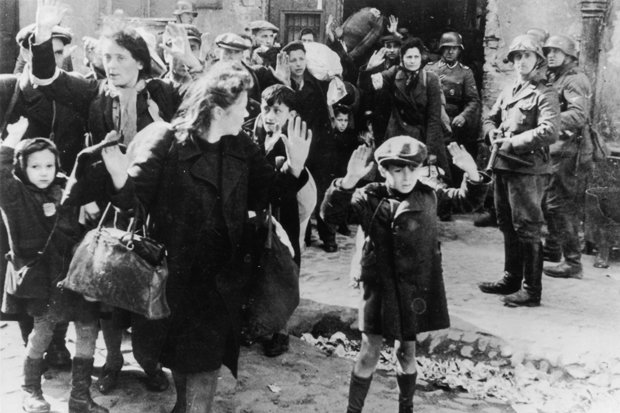
When the Nazis created the Warsaw Ghetto, hundreds of thousands of Jewish people were forced into a small, enclosed area surrounded by walls and guards. The purpose was not only imprisonment. It was humiliation. It was an attempt to break people physically, emotionally, and spiritually.
Inside the ghetto, life became a daily battle.Food became dangerously scarce.
Diseases spread quickly.Families watched their loved ones weaken from hunger.
Children who once dreamed about school, friendship, and the future now lived surrounded by fear and uncertainty.For many people trapped inside the Warsaw Ghetto, hope became almost impossible to hold onto.
THE MAN WHO HAD EVERY REASON TO ESCAPE — BUT CHOSE TO STAY
Perhaps the most powerful part of Janusz Korczak’s story is that he was not trapped by the same circumstances as many others.He was known.He was respected.He had connections.
Before the war, he had been one of Poland’s most recognized educators and writers. His work was admired by many people. There were individuals who understood his importance and wanted to protect him.According to historical accounts, Korczak was offered opportunities to leave the Warsaw Ghetto.He could have survived.
He could have escaped to safety.
He could have allowed others to hide him.
And many people would have understood.Nobody would have blamed an elderly man for saving his own life after spending decades helping others.
But Korczak saw the situation differently.He did not see himself as separate from the children.
He did not believe his life was more valuable than theirs.Those 200 children looked at him every day.They trusted him.
They believed he would protect them.
For many of them, Korczak was the closest thing they had to a parent.He understood that leaving would not simply mean walking away from a building or an institution.It would mean abandoning children who had already experienced abandonment.And that was something he could not do.
There is a profound difference between saying you love someone and proving it when sacrifice is required.Korczak spent his entire life teaching children about loyalty, compassion, and responsibility.Now he faced the ultimate test.Would he live by those principles when following them could cost him his life?
His answer was clear.He stayed.Not because he wanted to die.Not because he believed he could change the Nazis’ decisions.Not because he did not understand the danger.He stayed because he believed one simple truth:A person who promises to protect children cannot disappear when they need protection the most.


0 Comment:
Post a Comment